
VW Caddy Camper Conversion: Kits, Layouts, Costs & Compatibility (UK)

A VW Caddy is a brilliant ‘do-it-all’ vehicle, but there’s a common myth that one kit fits every Caddy. After measuring more than 400 vehicle variations, we know that one size does not fit all! This guide is based on a decade of fitting units to real UK Caddys.” — Martin, Campal
This guide explains the main conversion options (removable kits vs. fixed conversions), how to check your exact Caddy compatibility, and what you need for your first trip.
What do most people want from a VW Caddy camper conversion?

Most VW Caddy owners want the same outcome: a comfortable bed, sensible storage and a simple way to cook without permanent modifications. For many, the best solution is a removable setup that goes in for the weekend and comes out again for Monday morning. The key is choosing a kit designed for your exact model and seat layout, so it’s stable, comfortable and genuinely easy to live with.
In plain English, a good Caddy setup should let you:
- Sleep comfortably (without a “slope” or wobble).
- Store the essentials without constant repacking.
- Cook simply (often outdoors).
- Switch back to everyday use quickly.
Removable kit vs full conversion vs buying a converted Caddy
A removable kit is ideal if you want speed, reversibility and everyday usability. A full conversion suits you if you wish to build in electrics and a permanently “ready-to-go” camper, but at a higher cost and greater commitment. Buying a converted Caddy can be convenient, but you’re inheriting someone else’s layout decisions, wear and tear, and paperwork. If you have specific needs, consider our bespoke service.
Quick comparison
| Option | Best for | Pros | Trade-offs |
| Removable conversion kit | Weekend trips, dual-use (work/family + camping) | No drilling, keeps resale flexibility, quick install/removal, easier to “start small” | Less “always-on” electrics/insulation unless you add them |
| Permanent / fixed conversion | Frequent trips, you want integrated systems | Fully built-in feel, can include electrics/insulation/ventilation | More cost, less reversible, may affect insurance/resale |
| Buy a converted Caddy | You want convenience | Ready-made, no build time | You’re stuck with that layout; quality varies; hard to verify what’s underneath |
If you want to camp more often, the most straightforward setup is one that’s quick to install and doesn’t complicate everyday life.
The DIY route vs a removable kit
Building a DIY Caddy camper can be genuinely rewarding, especially if you enjoy making things and already have tools and space. The downside is that many first-time builds underestimate the time, material cost, and “small engineering problems” that only show up once you’ve slept in it.
DIY can work if you have time, tools, and patience, but most Caddy owners want a reliable result without taking the vehicle off the road for weeks. A removable kit sits in the middle: you get a professionally designed, stable layout that fits your vehicle, but you can still remove it completely when you need your Caddy back for everyday life.
DIY tends to involve
- Measuring, templating and re-measuring (Caddy interiors aren’t perfectly square).
- Choosing materials (and finishing edges properly so they last).
- Designing hinges/bed folds that actually clear the roofline.
- Fixing rattles and stability issues after the first few trips.
- Wiring and ventilation decisions (where mistakes get expensive).
Spotlight on Campal: a VW Caddy kit built for real life
Campal’s removable systems are designed for people who want their Caddy to do both jobs: daily driver and weekend micro-camper. The aim is simple: create a stable, vehicle-specific setup you can use regularly, without turning your Caddy into a permanent project.
Why Campal suits VW Caddy owners
- No permanent modifications: Campal systems are designed to be fully removable, with no drilling or irreversible changes to your vehicle.
- Vehicle-specific fit: Rather than “one size fits all”, Campal focuses on designs made to suit specific vehicle models and layouts. Every Campal is made to fit the specific dimensions of the vehicle it is intended for.
- Comfort-led: Practical comfort features (like supportive cushions and usable seating/sleeping space) matter more than gimmicks when you’re micro-camping regularly.
- Personal support: Campal is a family-run business (Martin and Lisa), and they’ll talk you through fit, setup, and expectations — including demo options.
- Rear Visibility: Our cushions are 8cm thick for a reason. When stacked on the unit in the boot, they sit at the parcel-shelf height. This means you can still use your rear-view mirror while driving to the coast.
- The “Chocolate Drawer” Feature: The Campal Vacation (our bestseller) is designed for “lazy” mornings. You can lift a cushion and access your storage from inside the bed—no need to get out into the rain to open a rear drawer just to find your snacks or a clean pair of socks.
DIY vs Campal: the practical differences (without the hype)
DIY can be rewarding if you love building and you have skill, time, tools, and space. But most first-time builds hit the same sticking points, especially in a VW Caddy where every centimetre matters.
Common DIY challenges (and how Campal avoids them):
- Measuring isn’t “one and done”.
DIY reality: Caddy interiors aren’t perfectly square; small errors become wobbles and gaps.
Campal approach: Units are designed around real vehicle dimensions, so the fit feels deliberate rather than improvised. - Rattles and movement appear after the first trip.
DIY reality: You only discover stability issues when you drive, brake, corner and sleep on it.
Campal approach: A purpose-designed, vehicle-specific module is built to feel stable in real use. - Bed mechanisms are harder than they look.
DIY reality: Hinges, folds and supports can bind, flex, or become a faff at bedtime.
Campal approach: The conversion process is engineered to be repeatable, so “day mode → night mode” isn’t a nightly rebuild. - Finishing takes longer than building.
DIY reality: Raw edges and poor finishing don’t age well (moisture, knocks, wear).
Campal approach: Campal units are made from durable birch plywood and finished to withstand real-world camping conditions. - It’s easy to build something you don’t actually use.
DIY reality: If setup takes too long or forces constant repacking, you’ll stop going.
Campal approach: The focus is on a layout you’ll genuinely use on a Friday night after work.
The best camper setup is the one you’ll still use when you’re tired, it’s raining, and you just want to get to bed.
Which Campal kit suits which VW Caddy use case?
The “right” Campal kit depends on how you’ll use your Caddy most. If you want the fastest overnights, prioritise a sleep-and-storage setup. If you’re going to cook and sit comfortably, choose an all-in-one layout. If you carry bikes or bulky gear, pick a configuration that keeps a clear gear channel without making bedtime a repacking job.
Quick match (use case → typical Campal fit):
- Sleep-first (fast weekend overnights): Look for Campal’s simpler sleep-and-storage style setups (minimal steps, maximum usable boot space).
- Seat-and-table + cooking (more “living space”): Campal’s all-in-one kitchen + seating style layouts are best when you want a proper sit-up space and quick meal setup.
- Gear-first (bikes/boards/sports kit): Campal’s flexible / split-style layouts suit you if you need to keep space for long or bulky gear and still convert to a bed easily.
Tip: Availability varies by your exact Caddy model and seat layout, so treat this as the starting point, then confirm the right fit.
If you’re at the “will it definitely fit my Caddy?” stage
That’s the right question — and it’s usually the deciding factor with Caddy variants.
Check your exact model here: VW Caddy compatible camper conversion kit
Compatibility isn’t just “Caddy or Caddy Maxi”. Your wheelbase (SWB vs Maxi), seat/rail setup, and trim level can all change what fits and how you sleep.
Before you buy anything, confirm:
- Wheelbase: Caddy (SWB) or Caddy Maxi
- Model year/generation (and any seat changes)
- Rear seat configuration: what you have and what you want to keep
- Boot shape/load floor quirks (varies by model/trim)
SWB vs Maxi: what changes for camping?
A Caddy Maxi provides more length for sleeping and generally makes it easier to build a comfortable bed without compromise. A SWB Caddy can still work brilliantly for micro-camping. Still, you’ll want a layout that prioritises efficient packing and a bed setup that doesn’t require you to sleep diagonally or constantly move gear.
Rule of thumb: the more “faff” your layout creates, the less you’ll use it.
How to choose the right VW Caddy conversion kit for your life
The best kit is the one that fits how you actually travel — not the trip you imagine once a year.
Most people fall into one of these routes:
1) Sleep-first (fastest setup)
If your priority is quick overnights and early starts, choose a sleep-first setup: stable bed platform, straightforward storage, minimal unpacking. It’s the easiest way to “actually go camping” without turning it into a build project, and it’s often the best starting point if you’re new to micro-camping.
Best for: quick weekends, touring, festivals, early starts
What to look for: stable bed, easy access to essentials, sensible storage
2) Seat-and-table (better for eating/working inside)
If you want to eat inside, work on a laptop, or wait out bad weather, a seating layout matters. The trade-off is that these setups can take longer to convert from “day mode” to “night mode”, so the best designs minimise steps and avoid forcing you to repack everything just to sleep.
Best for: longer weekends, mixed weather, couples who like indoor comfort
What to look for: simple conversion steps, comfortable seating height, easy bed changeover
3) Gear-first (space for bikes/boards/sports kit)
If you travel with bikes, boards, fishing kit or bulky gear, prioritise storage and access. The goal is a setup that keeps gear secure while allowing you to switch to sleep mode without unloading the entire vehicle.
Best for: cyclists, surfers, climbers, anglers, dog owners
What to look for: modular space, easy access, stable anchoring, flexible bed size
A layout is “good” if it allows you to change, eat, and sleep without constant repacking.
Layout ideas for a VW Caddy Maxi camper conversion
A Caddy Maxi gives you extra room to make the space feel calmer — particularly if you want a bed that doesn’t require awkward compromises.
Here are three layout archetypes you’ll see most often:
Layout A: Full-length bed + under-bed storage


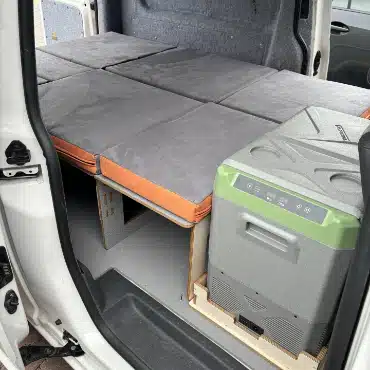
- Simple, reliable, quick
- Best for touring and regular weekends away
- Easy to keep “camp kit” packed and ready
Layout B: L-shaped or bench seating + bed conversion
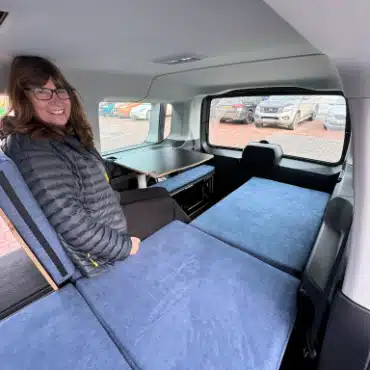

- Better “living space” feel
- Best when you plan to spend time inside
- Choose a design that doesn’t require five steps to go to bed
Layout C: Half-bed + gear channel

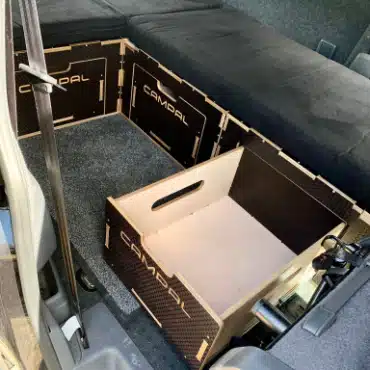

- Best for bikes/sports gear
- Keeps a “lane” for long items
- Works well for solo travellers or minimalist couples
What you actually need for your first weekend away
Most disappointment in micro-camping comes from missing the “boring basics”: privacy, power and ventilation, not from the bed itself.
Plan your first weekend around essentials: a comfortable sleeping setup, privacy (blinds or covers), basic power for charging, and a realistic cooking plan (often outdoors). If you sort these out early, micro-camping feels easy — and you’re far more likely to use the setup regularly rather than treating it as a once-a-year experiment.
First weekend essentials checklist
Sleeping
- Pillow + bedding you know you sleep well with
- Warm layer (UK nights can surprise you)
- Simple light/torch
Privacy + comfort
- Window blinds/covers
- A way to manage condensation (crack a window; consider airflow if you camp often)
Power
- Power bank for phones
- Optional: portable power station (if you’re charging more than phones)
Cooking
- Stove + gas (where allowed), lighter, simple pan
- Water carrier + washing-up basics
- A plan for “wet cooking days” (awning, shelter, or food that doesn’t need cooking)
The 10-Minute Home Trial: Before you commit to any kit, we recommend you “simulate” the trip. Put your Caddy seats down, climb in, and lie across them. This helps you understand what “micro” really means. It’s minimalist, it’s cosy, and it’s about the freedom of the road, not bringing your entire house with you
Installation & removal: what “no drilling” should look like
A removable kit should feel like something you can live with, not something you dread fitting.
A good removable Caddy kit should install consistently, feel stable once loaded, and come out without drama; using existing fixing points rather than drilling. The practical test is whether you can set it up when you’re tired, in bad weather, and still be confident it’s secure for driving and comfortable for sleeping.
A practical install/removal checklist
- Can you install it without needing “three tries”?
- Does it feel stable when you sit and lie down?
- Can you access essentials without unpacking everything?
- Can you remove it and get your Caddy back to daily use quickly?
- Is it manageable for one person to lift/move (or does it split into parts)?
What to budget for a VW Caddy camper conversion in the UK?
Costs vary by route, and the “true” cost depends on what you include beyond the kit.
A realistic Caddy camper budget should include the conversion route (removable kit, fixed conversion, or converted vehicle) plus your essentials: privacy, power, cooking, and comfort. Pricing changes over time, so the most straightforward approach is to budget for the kit you want plus a “first weekend” essentials list, then upgrade based on real use.
Typical cost buckets
- Removable kit: often the most cost-effective route for dual-use camping (especially if you’re starting out)
- Full conversion: higher cost, more built-in features
- Converted vehicle: varies widely (and quality varies too)
If you’re comparing products, compare like-for-like:
- Does the price include cooking?
- What about cushions/mattresses?
- What’s the warranty/aftercare support?
- Is it built to your exact vehicle model?
Insurance and legal considerations in the UK
In the UK, the key priorities are usually disclosure and safety, not chasing labels. Permanent modifications can affect insurers’ view of the vehicle; removable equipment may be treated differently, but policies vary.
Practical checklist (non-legal guidance)
- Tell your insurer what you’ve added (especially if anything is fixed in)
- Avoid blocking airbags/seat belts or safety systems
- Stay within payload limits
- Prioritise ventilation and safe cooking practices
Note: This section is general information, not legal/insurance advice. For specific details, check your policy wording, speak to your insurer, or refer to official UK guidance.
Next steps: how to get the right setup for your Caddy
- Confirm your exact model and setup (year, wheelbase, seats)
- Choose a route (removable kit vs permanent conversion) based on how often you’ll camp
- Plan your first trip around essentials (sleep, privacy, power, cooking)
- Get compatibility confidence before you buy
Check your model here: VW Caddy compatible camper conversion kits
FAQs
Will a camper conversion kit fit my exact VW Caddy?
It depends on your wheelbase, model year and seat setup. Always confirm your exact configuration first, then match it to a kit designed for that layout.
Can two adults sleep in a VW Caddy Maxi?
Often yes, depending on the bed design and your height/comfort preferences. Maxi models usually make sleeping layouts easier because you’re working with more length.
Is a removable kit safe if there’s no drilling?
A removable kit can be safe if it’s designed to be stable and secured using appropriate existing points. The key is stability under load and a consistent, secure installation.
How long does installation and removal take?
It varies by design and experience. The right setup should be repeatable and stress-free — especially when you’re tired or it’s raining.
Do I need blinds in a Caddy camper setup?
If you want privacy and better sleep, blinds (or suitable window coverings) are among the most valuable upgrades you can make.
How do you manage condensation in a micro-camper?
Ventilation helps most: crack a window, avoid wet kit inside where possible, and consider airflow-focused add-ons if you camp frequently.
Do I need to change the V5C body type to “motor caravan”?
This depends on what you’ve done to the vehicle. If you’re considering reclassification, check the latest official guidance and get advice for your specific situation.
What should I tell my insurer?
Tell them what you’ve added, especially anything fixed in. Policies vary, so don’t assume — ask and keep a record.
Is it wobbly?
No. We use reinforced stainless steel hinges, not piano hinges, and the unit is clamped to the wheel arches under inward pressure to ensure it feels like a fixed part of the car.
What about the weight?
While you shouldn’t lift a double unit alone, it is modular. Remove the drawers and bed parts first; the remaining housing weighs roughly 10kg, making it easy for one person to move it into the garage.
What about lead times?
We don’t hide our schedule. Please contact us for current build slots. In peak summer, this can be up to 6 weeks, so it’s always best to book your slot early.
